Phase 2
Day 1
Weight: 137.6 lbs
Previous Round LIW: 126.8 lbs
Difference: +11.2 pounds
I decided to start another phase but this time I am trying sublingual drops. I bought the injection HCG, mixed it with 5mls of water and added another 5 mls of Titos Vodka. I got the recipe from My HCG Journey. I've always read that you build up less of a tolerance with sublingual drops. It has been about 6-7 months since my last round and I was ridiculously hungry during the the entire thing. I was getting so discouraged. I was also unable to maintain my weight as well as I did in previous rounds.
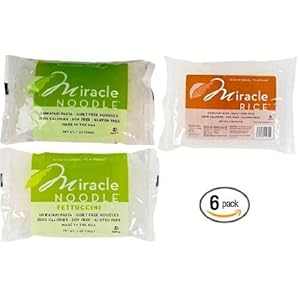
Today was my first VLCD (Very Low Calorie Day). I had read that we could add Miracle Noodles/Rice to the HCG diet and was very curious. When I found them at my local Whole Foods I was excited about trying them.
HCG Diet Journey has some information on them being successfully used with the HCG plan. Others have stated it was not helpful and made them stall. I'm going to try them every now and then and see if I have any adverse affects. I had about a 1/4 cup with my VLCD meals today.
The most compelling argument against using miracle noodles is from the HCG Diet 411 website.
"Mirical Noodles.Unfortunately, I've got some bad news for folks. I've been doing a lot of research on the konnyaku/miracle noodles/glucomannan flour, and I do have some answers for you.
First, Miracle Noodles, Shirataki Noodles, Glucomannan Powder, Konnyaku, and Konjac Flour are all basically the same thing in different names and shapes. It's a traditional japanese and chinese food that they've been eating for hundreds if not thousands of years. It's safe, natural, and genuinely good for you.
Glucomannan is a soluble fiber that is indigestible by the human body - hence all it's health claims and advertisements – and the ‘zero calorie’ label. What is not reported, except in medical journals, is that the more soluble a fiber is, the more it is fermented by microflora - gut bacteria in your large intestine. As a result, glucomannan is 90%-100% fermented into waste products (gasses: methane which is ‘excreted’ from the colon and co2 and h2 absorbed by the blood and breathed out) and short chain fatty acids (specifically acetate, propionate, and butyrate) which are then immediately absorbed by the body as caloric nutrients and metabolized, mostly by the liver and colon.
As a result, people who naturally have intestinal flora that can successfully break down the glucomannan will be able to derive metabolic nutrients and calories from eating it, and will also be drawing nutrients and suppressing adipose tissue lipolysis, a fancy medical term meaning it makes the bad/spare-tire fat cells assume they don't need to release any of their fat stores.
On P3, or on a normal diet, the additional benefits of glucomannan that are covered by all the advertisements make it a great food. Using the tofu-shirataki noodles (which are MUCH more pasta-like, but the tofu is barred on P2) are a good dietary choice. Using konjac flour as a thickener and eating the shirataki noodles or miracle noodles in whatever shape you choose goes terrific with asian dishes, and is a very healthy choice. The glucomannan fermentation and absorption is really a very positive digestive function, promoting a healthy digestive system.
The devil comes in P2, where HCG 'opens up' your metabolism. The short chain fatty acids that are the principal result of the fermentation of glucomannan thus play a far greater role in your 'open' metabolism, blocking the release of the stored fatty acids in your adipose (bad fat) tissue and providing energy for your internal organs that would otherwise be drawn from your stored fat.
For now, the shiratake, tofu-shiratake, and miracle noodles will be going into the fridge for storage until P3. The konjac flour will be staying in a tiny spice bottle on the shelf, next to the stevia and erythritol, where I expect to use 1/4 to 1/8th of a teaspoon at a time as a soup and sauce thickener.
Good luck folks, now I'm off to make some fake sweet and sour chicken. : ) "


No comments:
Post a Comment